
2026 Europe Cost of Living
2026-10-05
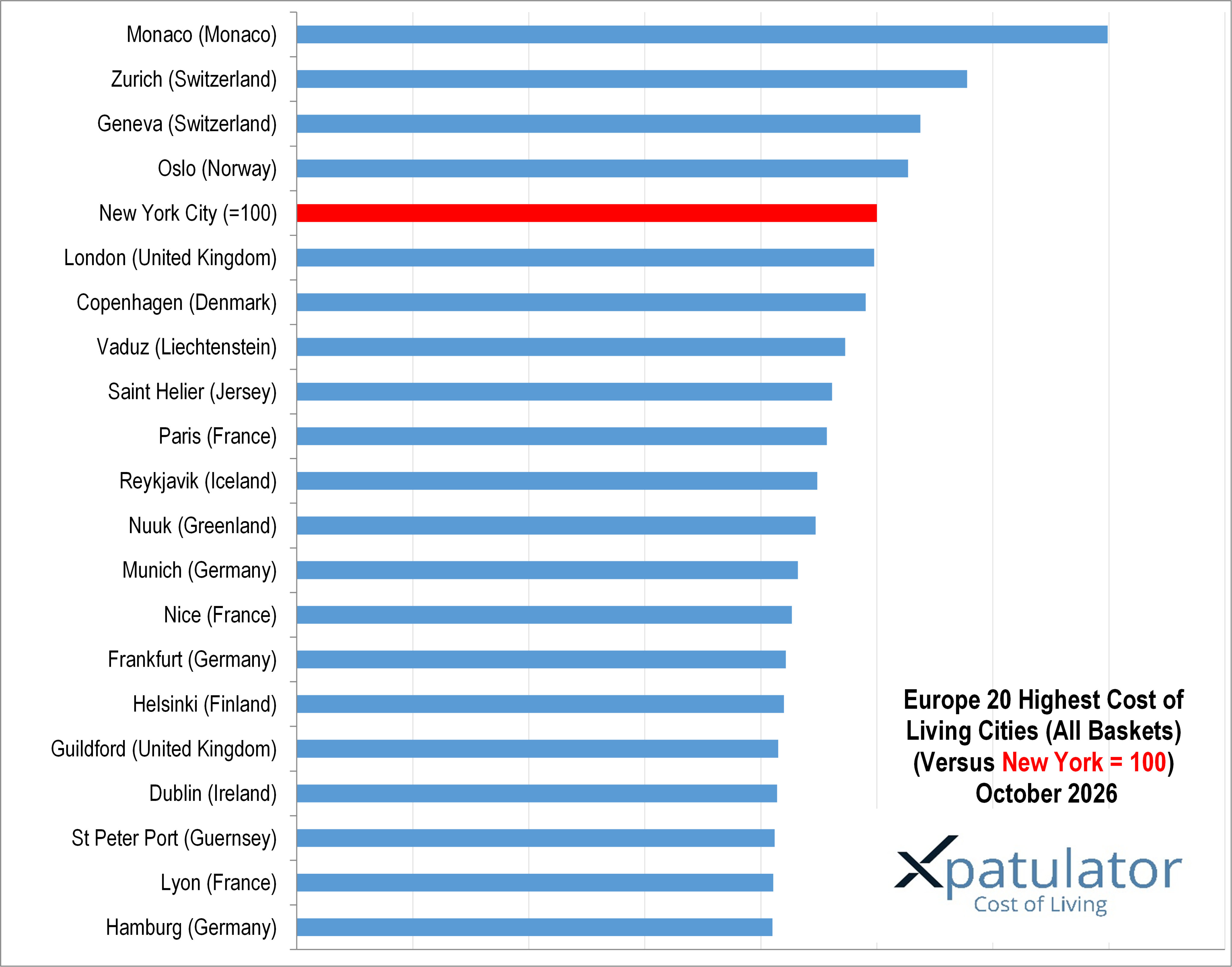
Xpatulator’s Europe cost of living rankings as at 1 October 2026 place Monaco 1st, followed by Zurich, Geneva and Oslo, while London and Copenhagen now sit just below the New York City benchmark. Most leading European indexes declined from July as the United States dollar strengthened against several European currencies, although domestic inflation and housing pressures remain important. Saint Helier rises 1 place to 8th and Dublin rises 7 places to 17th, while Paris falls to 9th and Hamburg declines 3 places to 20th. The results reinforce the need for expatriates and global mobility teams to assess salary offers using purchasing power rather than nominal pay.
Xpatulator’s Europe cost of living rankings as at 1 October 2026 show Monaco remaining the region’s most expensive location for international professionals, with a weighted Cost of Living Index of 139.8. Zurich ranks 2nd at 115.5, Geneva 3rd at 107.5 and Oslo 4th at 105.4. London ranks 5th at 99.5 and Copenhagen 6th at 98.1, placing both just below the New York City benchmark of 100. Vaduz follows at 94.5, Saint Helier at 92.3, Paris at 91.4, Reykjavik at 89.7 and Nuuk at 89.4. Munich, Nice, Frankfurt, Helsinki, Guildford, Dublin, St Peter Port, Lyon and Hamburg complete the top 20.
The ranking uses locations classified as City and City Country State within Europe. Xpatulator compares 13 expenditure baskets weighted according to spending patterns typical of international professionals and managers. Household accommodation carries the largest weighting at 30 per cent, followed by transport at 18 per cent and groceries at 16.5 per cent. The ranking therefore measures the cost of maintaining a comparable expatriate standard of living rather than general consumer prices alone.
Monaco’s position remains primarily structural. Its accommodation index exceeds 210, while recreation and culture, clothing, restaurants and hotels are also particularly expensive. Limited land and sustained international demand make suitable housing difficult to substitute. Zurich and Geneva have a different but similarly high cost base. Transport, clothing, restaurants and personal care all sit well above the New York City benchmark. Housing supply is also exceptionally tight. Zurich’s vacancy rate was only 0.11 per cent in June 2026, while Geneva’s was 0.31 per cent.
Oslo and Copenhagen reflect the high wages and service costs of Nordic economies. Transport is particularly expensive in both cities, while Oslo also records high furniture, household goods and personal care costs. Helsinki ranks 15th at 84.0, lower than the other Nordic capitals but still affected by expensive transport, alcohol and tobacco, household goods and services.
London falls below the New York City benchmark in the October data, declining from 101.4 in July to 99.5, although it remains 5th in Europe. Housing and commuting remain important. Average private rent in London reached 2,332 pounds sterling a month in August 2026, 3.5 per cent higher than a year earlier. Guildford ranks 16th at 83.0, showing that high housing and service costs extend beyond the capital.
Small European jurisdictions remain prominent. Vaduz ranks 7th, Saint Helier rises 1 place to 8th and St Peter Port rises 1 place to 18th. Restricted housing supply, small service markets and imported consumption can keep costs high even where populations are small. Reykjavik and Nuuk face a related problem of remoteness, with freight, fuel and limited retail competition raising the cost of transport and imported goods.
Paris falls 1 place to 9th, while Nice ranks 13th and Lyon 19th. Clothing, transport and miscellaneous expenditure are important in the French cities, while housing pressure remains a concern in major urban and tourist centres. French residential rents were 1.6 per cent higher in July 2026 than a year earlier, while proposed European measures on short term rentals reflect wider concern about housing availability in cities including Paris.
Munich ranks 12th, Frankfurt 14th and Hamburg falls 3 places to 20th. Transport and miscellaneous expenditure are important parts of their expatriate baskets. German rents for new leases increased by 3.5 per cent over the year in the first quarter of 2026, with Hamburg among the major cities recording stronger increases.
Dublin records the largest movement within the top 20, rising 7 places to 17th even though its index declines slightly from 83.5 to 82.8. This illustrates that a ranking is relative. Dublin moved higher because several other European locations became cheaper in comparative terms, not because its overall index increased. Ireland nevertheless continues to face housing and broader household cost pressures, with the October budget including measures aimed at energy, childcare and household finances.
Exchange rates help explain the broad decline in many European indexes between July and October. By late September the United States dollar had reached a 16 month high against both the euro and Swiss franc, while sterling was near a three month low against the dollar. A stronger United States dollar reduces the converted cost of European expenditure for a dollar paid expatriate, even if local prices are still increasing. Denmark’s krone is maintained close to a fixed rate against the euro, so its movement against the United States dollar broadly follows the euro.
Inflation has nevertheless become less comfortable. Xpatulator’s international inflation update dated 5 October 2026 notes renewed energy pressure, while euro area inflation rose to 3.8 per cent in September from 3.2 per cent in August, driven mainly by energy and food. Higher oil and gas prices associated with Middle East instability increase transport, freight and utility costs across Europe. Currency weakness can therefore lower a location’s United States dollar converted index while simultaneously making imported energy more expensive locally.
For expatriates and global mobility specialists, the relevant issue is salary purchasing power rather than nominal salary. A higher offer in Monaco, Zurich, Geneva, Oslo or London may still buy less once accommodation, transport, healthcare, education and other recurring costs are considered. Xpatulator’s Salary Purchasing Power Parity Calculator estimates the equivalent host salary needed to maintain the same standard of living and helps organisations determine whether additional housing, education, transport or cost of living support is required.
Use Xpatulator’s Cost of Living Calculators and Tools to compare European locations, understand changes in purchasing power and establish the salary, allowances and international assignment package needed to maintain a comparable standard of living.