
2026 Middle East Cost of Living
2026-09-09
Xpatulator’s Middle East cost of living rankings as at 1 July 2026 show Jerusalem as the highest cost city in the region, followed by Abu Dhabi, Dubai and Kuwait City. The article explains how housing, imported goods, private services, education, healthcare, exchange rates, inflation and regional uncertainty affect expatriate salary purchasing power, and why global mobility teams should use structured cost of living comparisons when setting salaries, allowances and assignment packages.
Xpatulator’s Middle East cost of living rankings as at 1 July 2026 show a region with sharply different expatriate cost profiles. The ranking uses City and City Country State locations. New York City is the benchmark location and is set at 100. Each index therefore shows how the cost of a comparable expatriate basket differs from New York City.
Jerusalem ranks as the most expensive Middle East city in the 1 July 2026 data, with a weighted cost of living index of 99.6 and a global rank of 18 out of 780 locations. Abu Dhabi ranks 150 globally with an index of 78.7, followed by Dubai at 78.1 and Kuwait City at 74.2. The next group includes the West Bank at 70.3, Doha at 68.2, Beirut at 62.5, Riyadh at 61.1, Manama at 60.5 and Sanaa at 58.9. Jeddah, Amman, Medinah, Dammam, Muscat, Mecca, Baghdad, Damascus and Tehran sit lower in the global ranking, but lower index values do not always mean a simple or low cost assignment.
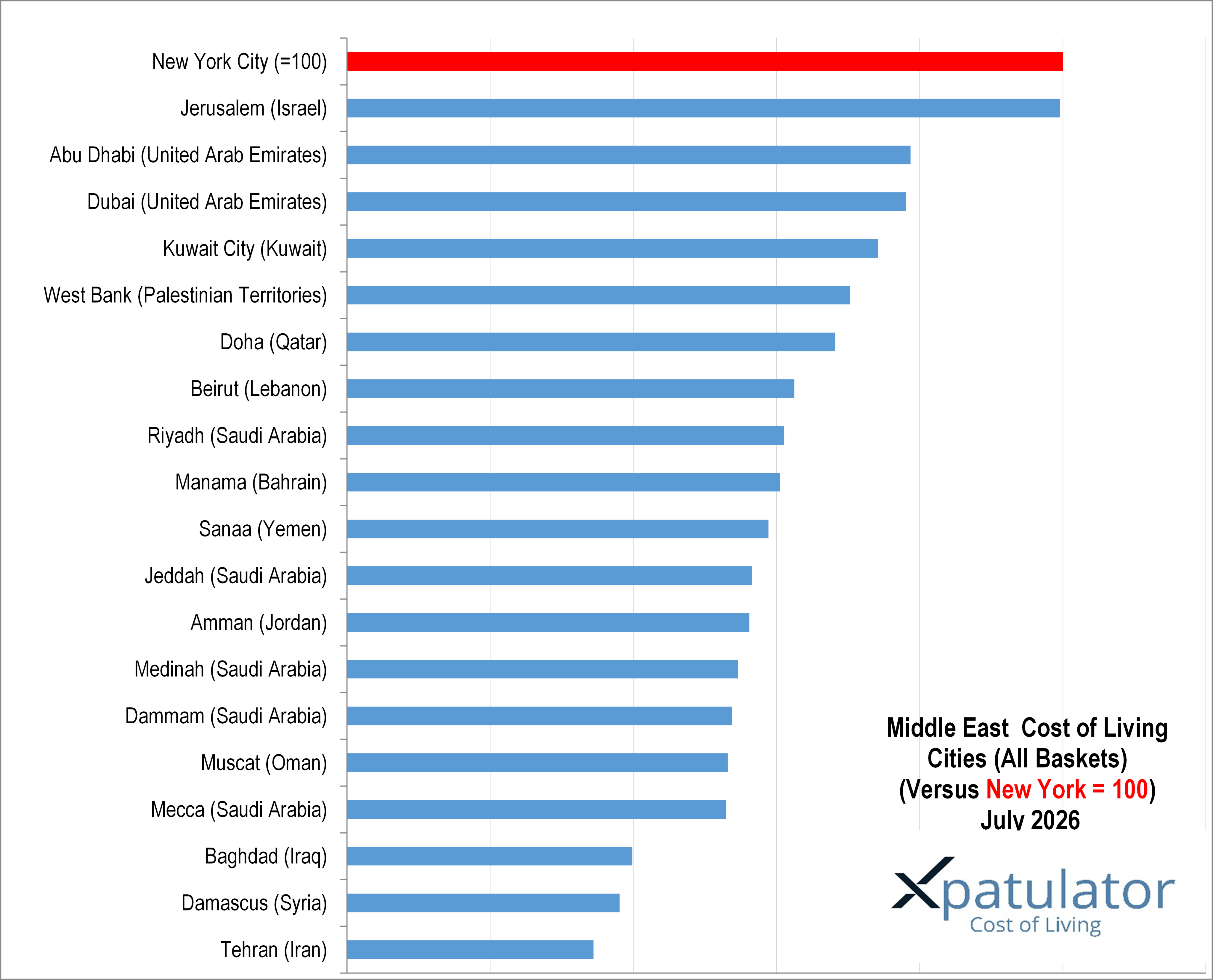
Jerusalem’s high ranking reflects housing pressure, service costs, imported consumption and the indirect effects of regional uncertainty. Security conditions can influence insurance, travel patterns, private services, logistics and the availability of suitable accommodation. For expatriates, Jerusalem sits close to the New York City benchmark, so a salary package should be tested carefully before relocation. A high nominal salary may not protect purchasing power if rent, healthcare, education, transport and personal services are higher than in the home location.
Abu Dhabi and Dubai form the next high cost tier in the region. Both cities have large expatriate populations, high demand for good quality housing, developed private healthcare, international schooling and a wide range of imported goods. Their cost profiles are often shaped by neighbourhood choice, housing size, school selection and lifestyle expectations. The United Arab Emirates dirham is fixed against the United States dollar, so year to year ranking changes are more likely to be driven by local housing cycles, services and inflation than by currency volatility against the United States dollar.
Kuwait City ranks below the United Arab Emirates cities but remains a significant expatriate cost location. Housing in suitable areas, private services, transport and imported goods can be material. Kuwait’s currency is linked to an undisclosed basket of international currencies rather than a simple United States dollar peg, so exchange rate effects can differ from those in the United Arab Emirates, Saudi Arabia, Qatar and Bahrain.
The West Bank, Beirut and Sanaa should be read with caution. The headline index may understate the practical cost of maintaining a secure and predictable expatriate standard of living. In constrained or higher risk environments, the cost of safe accommodation, reliable transport, access to healthcare, imported goods, contingency planning and security related services can be more important than ordinary consumer prices.
Doha ranks below Abu Dhabi, Dubai and Kuwait City, but expatriate costs can still rise quickly where international schooling, private healthcare and larger accommodation are required. The Qatari riyal is fixed against the United States dollar, which limits currency movement against the benchmark currency. Local housing, education and services are therefore more important cost variables for most expatriate packages.
Saudi Arabia’s cities sit mainly in the middle and lower sections of the regional ranking. Riyadh records an index of 61.1, Jeddah 56.6, Medinah 54.6, Dammam 53.8 and Mecca 53.0. Saudi Arabia’s large domestic market helps moderate some costs, while the Saudi riyal peg to the United States dollar reduces foreign exchange volatility for dollar linked comparisons. However, expatriate costs still vary by housing compound, transport arrangements, healthcare access, schooling and the level of private services required. Riyadh in particular can be more expensive for international professionals than the national context might suggest because of strong business demand.
Manama and Muscat remain moderate by regional ranking, with indices of 60.5 and 53.2 respectively. Both can still be expensive for newcomers if the lifestyle assumption includes premium housing, imported groceries, private schooling and frequent travel. Amman is lower at 56.2, but expatriate families may still face meaningful costs for rent, education, healthcare and transport.
Baghdad, Damascus and Tehran sit near the bottom of the global ranking among Middle East cities in the 1 July 2026 data. These lower index values should not be interpreted as low assignment risk. Sanctions exposure, market access constraints, currency pressure, limited availability of international standard goods and security requirements can make expatriate living more complex. In these cities, costs may be concentrated in secure accommodation, transport, logistics and contingency support rather than ordinary consumer spending.
Inflation and exchange rates remain central to Middle East cost of living analysis. In the Gulf, dollar pegs can reduce exchange rate volatility against the United States dollar, but they do not remove local inflation, housing pressure or service cost increases. In locations with more volatile currencies or constrained access to hard currency, imported goods and services can become expensive even where local prices appear lower in domestic currency terms. Regional conflict, energy price movements, supply chain disruption and insurance costs can also affect the expatriate basket.
For expatriates, the practical issue is salary purchasing power. A higher salary in Jerusalem, Abu Dhabi, Dubai, Kuwait City, Doha or Riyadh may not deliver a higher standard of living if accommodation, school fees, healthcare, transport, groceries and personal services absorb a larger share of income than in the home country. For higher risk or lower ranked locations, the issue may be less about ordinary prices and more about the cost of safe, reliable and predictable living arrangements.
Global mobility specialists should therefore avoid comparing salary offers on gross pay alone. A structured cost of living comparison helps determine whether base salary, a cost of living allowance, housing support, education support, transport support or hardship related provisions are required. It also reduces the risk of failed assignments, post arrival disputes and unexpected package renegotiation.
Xpatulator’s Salary Purchasing Power Parity Calculator helps estimate the salary required to maintain purchasing power between home and host locations. This is particularly useful where currencies, inflation trends, housing costs and expatriate basket costs differ materially.
Use Xpatulator’s Cost of Living Calculators, Tools and FAQ's to support informed decisions on cost of living, salary purchasing power, allowances and assignment packages needed to maintain a comparable standard of living in the Middle East.